When I started working as a Nutritionist specialising in childhood feeding, I thought my children would be amazing eaters and definitely wouldn’t be a fussy around food – how wrong was I!? I mean, they took to weaning really well so surely that would continue – erm NO!
We think that at least 50% of children go through a fussy eater stage and this is common around 2-5 years of age and so, there is no surprise, that I witnessed this first hand! Thankfully, now Jack and Francesca at age 11 and 9 respectively are great eaters and love their food but my goodness they tested my limits when they were toddlers!
I know I am not alone and that is why I have written this article to help parents to understand why children become picky around foods and in my next piece, I will be giving you tips on how to turn this phase around and support your children to love food and to make mealtimes stress-free!
- They learn the word “no” around this time and this can be very effective and emotive! Children naturally like attention and by saying “no” and playing up at mealtimes will no doubt get them some attention! And in some instances, the more they protest about not liking the food in front of them, the more likely it is that they will get an alternative meal – and then the cycle starts!
- From around 2 years of age, toddlers’ brains start changing and they start realising that they are a “separate being” to you. They realise that are an independent person which means they also realise that they can control some of their environment, and usually, this is food! If you think about it, as parents we control so much of their life from which clothes they wear to who they play with. When they start realising that they want to have some control, food is the thing they use to exert authority. This is because they can physically throw it, move it away, spit it out, call it “yucky”, feed it to the dog! And when you make a fuss about this, they do it even more!
- Evolution plays a part and the fancy name is “Neophobia” or “fear of the new”. It is thought that around 2 years of age was when cavemen took their children out foraging for food and taught them to be very cautious of anything new in case it was poisonous and unsafe to eat.
- Pressure to eat at home. As parents, our children are our life. And we want to nurture them!
- And we can do this by food. Remember how much mind space was taken up with milk feeding, am I getting it right, are they drinking enough, are they drinking too much etc. This is the same with food. We want to give them the best in terms of nourishment and so the dinner table can become a very stressful place to be if our children (in our eyes), are not getting nourished. This may also co-incide with our own expectations of portion sizes. Children don’t need as much food as we probably think and sometimes presenting too much food on a plate can be overwhelming. It is better to start with a small amount and then offer more.
- The language which is used at mealtimes can affect what children eat. Trying to cajole a child to eat what you think they should be eating can be very frustrating for a child. Imagine if you were trying to fall asleep but you had a voice in your ear telling you “ooh, sleep is good, we all need to sleep, sleeping is so important to help you grow…” Well, it’s the same with food. If we start telling children the benefits of food for example “It’ll make you grow strong, just one more mouthful and you will be like Popeye, here’s a choo choo train into the tunnel…, it becomes too overwhelming and frankly annoying.
- Children are good at grazing on snacks during the day and although snacks are important, too many can have an obvious impact on hunger pangs and satiety levels. We need our children to really understand what it feels to be hungry but if they are constantly snacking during the day, this won’t happen. And then at mealtimes, we get upset if they don’t eat their roast dinner which you have spent ages preparing from scratch. So making sure there is decent period of time between snack time and mealtime is really important so our children can start to listen to their hunger and control their own appetite.
- Parental eating habits! Being a good role model at mealtimes is so important. At the moment, you are probably the most important person in their lives (wait until they get to the teenager years when you will probably be the most embarrassing person in their lives! So if you want them to eat well, you need to show them how it’s done!
- Not having a structure around mealtimes. We want to show our children that mealtimes are a place for family time. That they occur around the same times each day and that meals are eaten at the table with no distractions such as TV or screens of any sort. This gives a child a sense of understanding of what is expected of them and this can be a comfort. You’ll be surprised how many people come to us saying that their children eat really well at nursery or school but not a home. This is likely because there are set times for meals and snacks in a learning environment and children know what is expected of them during the day. So make sure it is the same at home!
- Genetics plays a role! So, if you were fussy (or may still be fussy) when it comes to food choices, there is a possibility that your child may also follow suit.
The good news is that this is a phase which can be changed for the better. There are many techniques to do this and much support available. If you have serious concerns around your child’s eating habits it is vital that you speak to your GP in the first instance so they can rule out any other problems which may be contributing to you having a fussy eater.
As a registered Nutritionist, I have been running fussy eaters’ workshops for over 9 years and have seen some amazing results! I recently received this feedback which I love getting as I know that my workshops are making a difference:
“I just wanted to send a quick message to let you know your tips are working.
My 3-and-a-half-year-old has been eating the same meals as us spaghetti bolognese, chorizo butternut squash pasta and lasagna. I have just tried the baby step of saying that’s fine but this is what we’re having for dinner tonight, offering a sticker for a kiss or a lick and 2 stickers for a try then he realises he likes it and eats some more! So, thank you I’ll let you know how it continues”
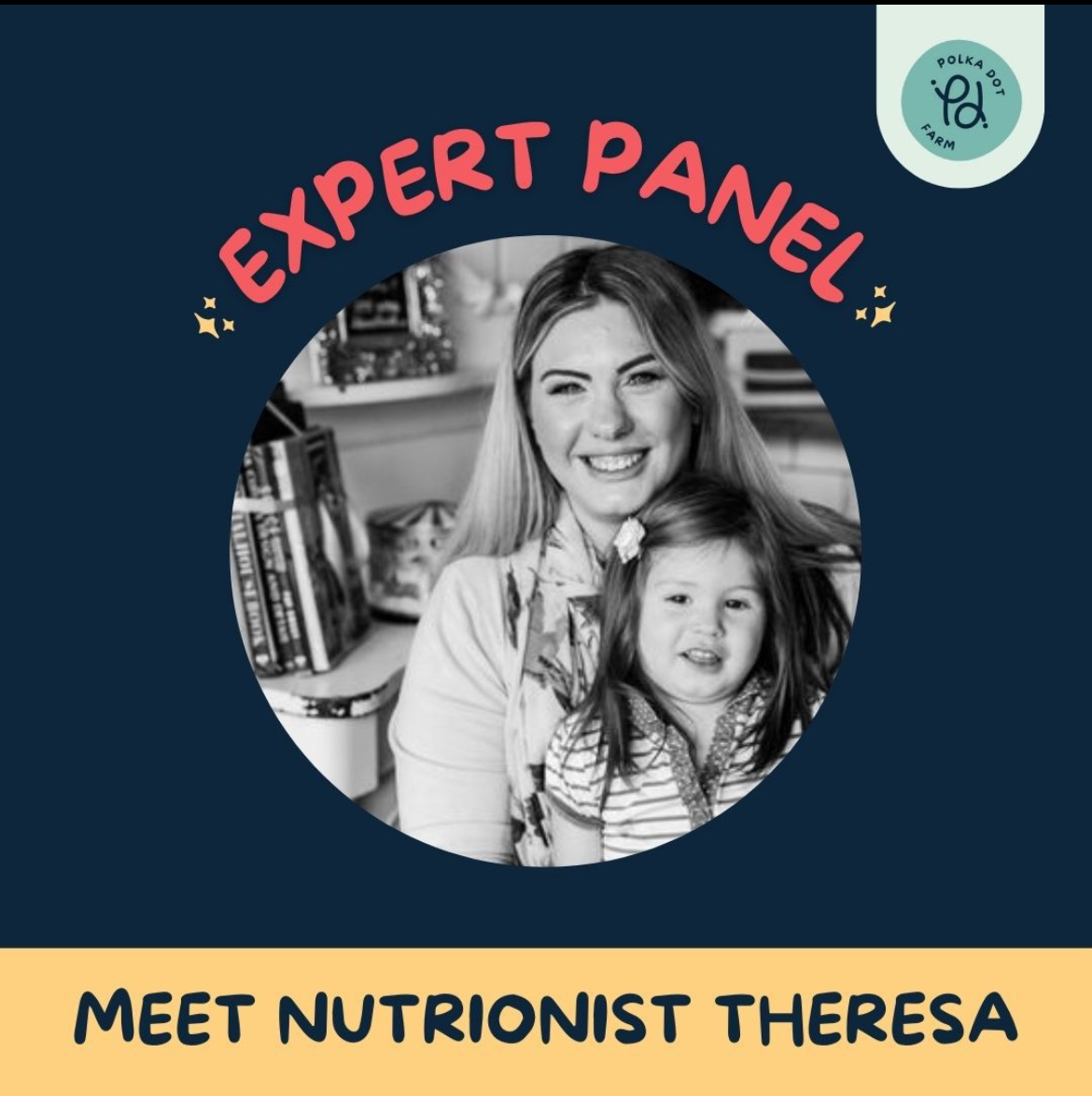
You can find more about Theresa on her instagram page @yourfamilynutritionist. Look out for her workshops coming to nursery soon!